




The Massachusetts Muslim Commission Explained: Why It’s Controversial
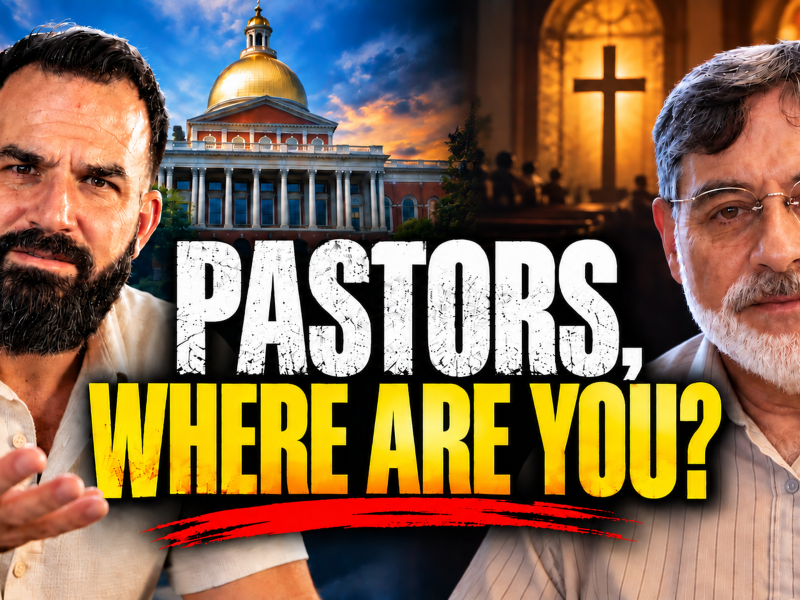
Massachusetts lawmakers are considering legislation that would establish a permanent state commission focused specifically on people who practice Islam—and Pastor Tim Hatch says Christians and Massachusetts residents need to understand exactly what the proposal would do.
The legislation, titled An Act Promoting the Civil Rights and Inclusion of American Muslims in the Commonwealth, would establish an 11-member permanent commission whose members would be appointed by state officials. Its responsibilities would include researching issues affecting Muslim Americans, advising government officials, evaluating state policies, addressing discrimination and Islamophobia, and serving as a liaison between government and Muslim communities.
But one provision in particular raises an important question for Tim: the commission would also be authorized to identify and recommend qualified American Muslims for appointed positions at all levels of government, including boards and commissions.
In this special edition of The Deep End, Pastor Tim Hatch examines the proposal from a Christian and constitutional perspective and asks whether Massachusetts is crossing an important boundary between protecting religious liberty and giving one particular religion a formal role within state government.
Tim argues that this distinction matters.
Christians should support the religious liberty of Muslims just as strongly as they support the religious liberty of Christians, Jews, and people of every other faith—or no faith at all. But religious liberty is different from government promotion or preferential treatment of a particular religious community.
That leads to the central question of the episode: Can the government remain religiously neutral while establishing a permanent commission specifically organized around members and interests of one religion?
Tim examines the proposed commission’s responsibilities, including its ability to conduct research, advise executive and legislative bodies, assess state programs affecting Muslim Americans, recommend policies, receive certain private and government funds, employ a paid executive director and staff, and recommend Muslim Americans for government appointments.
He also addresses the proposal’s mandate to study Islamophobia and discrimination against Muslims and recommend programs, policies, or legislation in response. Tim raises concerns about how criticism of Islam and Islamic teaching would remain protected while the state seeks to combat genuine anti-Muslim hatred and discrimination.
The episode also puts the proposal into the larger context of Massachusetts politics, religious liberty, the First Amendment, church-state separation, and America’s history of protecting the free exercise of religion without establishing a state religion.
Tim makes an important distinction throughout the discussion: his concern is not hostility toward Muslim people.
Christians are called to love their Muslim neighbors, treat them with dignity and respect, and freely share the Gospel of Jesus Christ with them. Religious freedom must protect Muslims as surely as it protects Christians.
The question is whether protecting that freedom requires—or permits—the government to create permanent institutions centered specifically on a particular religious community.
The legislation has not become Massachusetts law. But it has advanced through the legislative process, making the debate over its purpose, structure, and implications one Massachusetts residents should understand.
For Tim, the principle should remain straightforward: freedom of religion must mean freedom for every religion without government establishment, favoritism, or coercion.
In This Episode
- What is the proposed Massachusetts Muslim Commission?
- What would the 11-member commission actually do?
- Who would appoint its members?
- Why Massachusetts lawmakers say the commission is needed
- The commission’s role in advising state government
- Recommending Muslim Americans for government appointments
- Studying Islamophobia and anti-Muslim discrimination
- Religious liberty and government neutrality
- The First Amendment and separation of church and state
- Article VI and religious tests for public office
- Government funding and staffing of the proposed commission
- Massachusetts’ history with church-state separation
- Why Tim believes Christians should pay attention
- Loving Muslim neighbors while disagreeing with Islamic theology
- The difference between religious freedom and government favoritism
- What Massachusetts residents should know as the legislation advances
🌎 Cultural Relevance
Religious freedom is one of America’s most important constitutional principles—and protecting it requires consistency.
Muslims should be free to practice their religion. Christians should be free to practice Christianity. Jews should be free to practice Judaism. People should also be free to reject religion entirely.
The harder question comes when government moves beyond protecting religious exercise and creates institutions designed around the interests and representation of a particular religious community.
Supporters of the Massachusetts proposal may view the commission as a civil-rights measure designed to address discrimination and ensure Muslim Americans have a voice in government.
Critics may see something fundamentally different: a permanent government commission organized explicitly around religious identity, empowered to advise state leaders and recommend members of that religion for government appointments.
That tension deserves serious examination.
Christians should be capable of opposing genuine discrimination against Muslims while simultaneously asking whether government policies maintain the religious neutrality required in a pluralistic society.
Those principles are not contradictory.
Religious freedom works precisely because government should protect people’s ability to believe, worship, speak, evangelize, disagree, convert, or reject religion without making government itself the promoter of a particular faith.
💬 Join the Conversation
Should Massachusetts establish a permanent commission specifically focused on people who practice Islam?
Is this primarily a civil-rights initiative—or does it cross an important church-state boundary?
And where should government draw the line between protecting religious minorities and giving a particular religious community an official role within government?
Share your thoughts in the comments and join the conversation.
👉 Watch the full episode, share your perspective, and join the discussion.
📣 Engage With Us
✅ Drop a comment below—let’s talk.
✅ Watch & Subscribe on YouTube.
✅ Support The Deep End Podcast as we explore faith, culture, politics, and current events through a biblical worldview.
👉 Partner with us: https://timhatchlive.com/support
👉 Become a monthly member: https://patreon.com/timhatchlive
🙏 Share the Hope
Christians do not need to fear people of other religions in order to defend religious freedom.
We can love our Muslim neighbors, treat them with dignity, defend their right to worship freely, and still disagree profoundly about theology and the identity of Jesus Christ.
At the same time, Christians should remain engaged when government policies raise questions about religious liberty, freedom of speech, and the relationship between religious institutions and the state.
If you live in Massachusetts—or know someone who does—share this episode so more people understand what this legislation proposes and can thoughtfully consider the principles at stake.
Religious liberty belongs to everyone. And preserving it requires Christians to defend both the freedom to believe and the freedom to disagree.



No Comments